What is
Gothic
Americana?
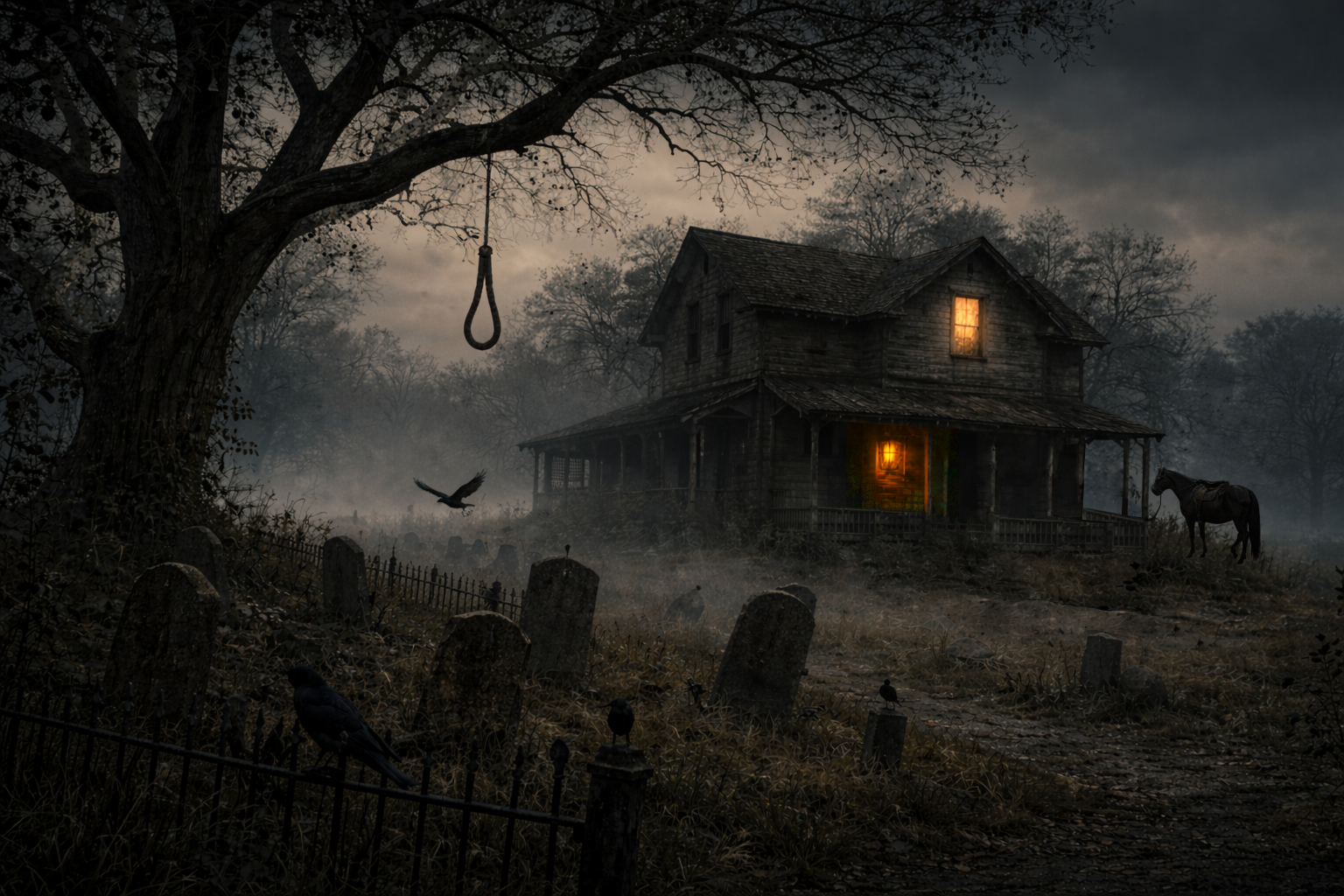
American Gothic stories often grow out of specific places. Landscapes where history, myth, and atmosphere converge.
Gothic Americana is a literary tradition where American landscapes (frontiers, small towns, and cities) become places of memory, myth, and the uncanny.
Sometimes Gothic Americana emerges in remote landscapes: deserts, forests, abandoned roads, and forgotten towns where history seems to linger in the land itself. Other times it appears in cities, where strangeness hides in the shadows of American architecture: in old hotels, narrow streets, riverbanks, and neighborhoods built over older stories.
This broader imaginative tradition explores how the familiar landscapes of America conceal deeper, stranger realities. In Gothic Americana, the land remembers, the past is never fully gone, and the ordinary world is only a thin surface over something older, quieter, and waiting.
These stories are not only about ghosts or monsters, but about memory, distance, loneliness, reinvention, and the feeling that something in the American landscape is watching, even when no one is there.
*
Explore the Territories of
Gothic Americana
The Dark Frontier—where Western mythology meets the uncanny.
Fantastical Childhood—where imagination reveals hidden worlds.
The Haunted City—where strangeness lingers in the shadows of American cities.
Essays on
Gothic Americana
Gothic vs Goth: What’s the Difference?
Cosmic Horror on the American Frontier
What Makes a Haunted City Uncanny?
Why Americans Tell Ghost Stories Differently
Gothic Horror: Fear of the Unknown
What Makes Children’s Fantasy Magical?
The Child-Centered Fantasy Tradition
Essential Books of
Gothic Americana
These reading lists explore the literary traditions that shaped the territories of Gothic Americana, from the haunted landscapes of the American West to strange cities and the dreamlike worlds of childhood fantasy.
Essential Childhood Fantasy Books
These works helped shape the imaginative territories where Gothic Americana lives. Stories where landscape, memory, myth, and the uncanny meet.
Explore
Glyph House
Books