*
The Uncanny
in the Absence
of Wilderness
In the wilderness, the uncanny often arrives through nature itself:
The vastness of the landscape;
The unpredictability of animals;
The silence of forests older than memory.
Cities, by contrast, are designed to suppress that wildness:
Streets are mapped;
Buildings ordered;
Lights banish the darkness.
Yet the human imagination does not easily surrender mystery. Where nature recedes, the uncanny finds new forms. In crowded urban spaces, strangeness returns as rumor, crime, ghosts, monsters, and the hidden lives of strangers. Vampires slip through alleyways, ghouls haunt forgotten tunnels, and the architecture of the city begins to feel alive with memories and secrets.
In this sense, the haunted city may be understood as a kind of substitute wilderness, a landscape where the supernatural emerges to fill the space once occupied by the unknown.
What Makes
Haunted Cities
Uncanny?
Cities are often imagined as places of logic, grids of streets, towers of steel, and systems designed for efficiency and movement. Yet anyone who has lived long enough in a city knows that something older moves beneath that order. Memory accumulates in stairwells and alleyways. Buildings outlive the lives that once filled them. Entire neighborhoods seem to remember things no living person does.
In this sense, cities are natural habitats for the uncanny. They are places where past and present exist uneasily beside one another, where a forgotten door, a strange coincidence, or a familiar street seen at the wrong hour can suddenly reveal the hidden layers beneath the ordinary world.
The Architecture
of the
Urban Wilderness
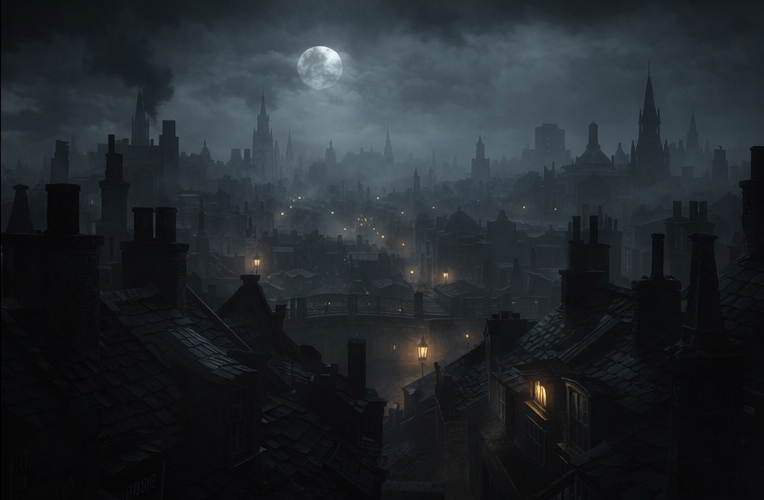
In the city, architecture becomes a kind of artificial landscape:
Narrow alleyways replace forest paths;
Subterranean tunnels and basements descend where caves once opened in the earth;
Towers rise like cliffs above the streets, while rooftops form a hidden terrain high above ordinary life.
Within this constructed wilderness, entire worlds remain unseen:
Forgotten corridors, sealed rooms;
Abandoned theaters;
Darkened apartments accumulate stories long after their inhabitants have vanished.
It is here, in the maze of walls and passageways, that the haunted city reveals its most uncanny quality: the sense that countless lives and histories exist just beyond the boundaries of what we can see.
*
The City
Beneath
the City
For this reason, haunted cities rarely depend on ghosts alone. Their true power lies in the sense that another city exists beneath the visible one: a deeper landscape made of memory, forgotten architecture, and the strange patterns that emerge when countless lives intersect across time. Streets that appear ordinary by day may reveal hidden meanings by night. A familiar building may conceal histories its present inhabitants barely suspect.
It is within this layered landscape that the uncanny thrives.
The haunted city reminds us that modern life, for all its order and illumination, has never fully banished mystery. Instead, the unknown has simply moved indoors, into stairwells, corridors, forgotten rooms, and the shadows that gather quietly behind the walls of the familiar world.
*
EXPLORE THE HAUNTED CITY
where Gothic literature remains undead within the architecture of haunted cities.
Why Americans Tell Ghost Stories Differently
The Haunted City Tradition
Gothic Horror: Fear of the Unknown
Essential Haunted City Books