THE
HAUNTED CITY
TRADITION
Long before modern horror films filled city streets with vampires and zombies, writers had already discovered that great cities possess a strange imaginative power. Dense with history and layered with human lives, cities naturally invite stories in which the familiar world conceals darker forces. Cathedrals, alleyways, mansions, and crowded streets become stages where the uncanny emerges from the architecture of everyday life.
In The Hunchback of Notre-Dame, Paris rises not merely as a setting but as a living presence. The towers of the cathedral loom over the city like ancient sentinels, and the labyrinth of medieval streets shapes the destinies of the characters who inhabit them. Hugo understood that architecture could carry memory, and that a city’s stones often remember more than its people.
Later in the nineteenth century, writers of Gothic fiction brought this same sensibility into the modern metropolis. In Strange Case of Dr. Jekyll and Mr. Hyde, London becomes a map of divided identities: respectable squares and shadowed doorways reflecting the hidden duality within the human soul. The city itself appears to harbor secrets that polite society prefers not to see.
A similar tension animates Dracula, where an ancient predator slips quietly into the crowded streets of modern London. Here the density of the city becomes an advantage for the supernatural: in a place where millions live side by side, the monstrous can move almost invisibly among the living.
Yet the haunted city does not always reveal itself through monsters alone. In Bleak House, London appears as a fog-shrouded labyrinth where the boundaries between justice, bureaucracy, and human suffering dissolve into a vast urban maze. Dickens shows how the complexity of the modern city can itself become uncanny, as if industrialization and the machinery of society were capable of haunting its own inhabitants.
And beneath the grand architecture of the modern city, writers have often imagined hidden worlds entirely unknown to ordinary citizens. In The Phantom of the Opera, the Paris Opera House conceals a secret domain beneath its glittering halls, a labyrinth where the monstrous and the forgotten dwell below the surface of polite society.
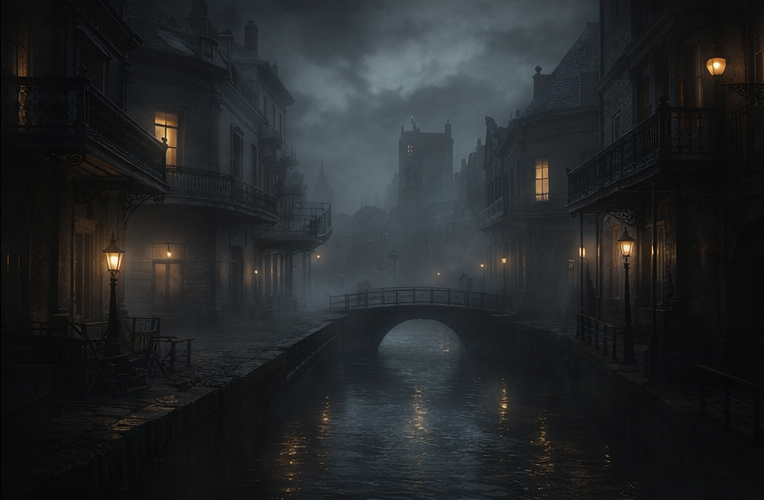
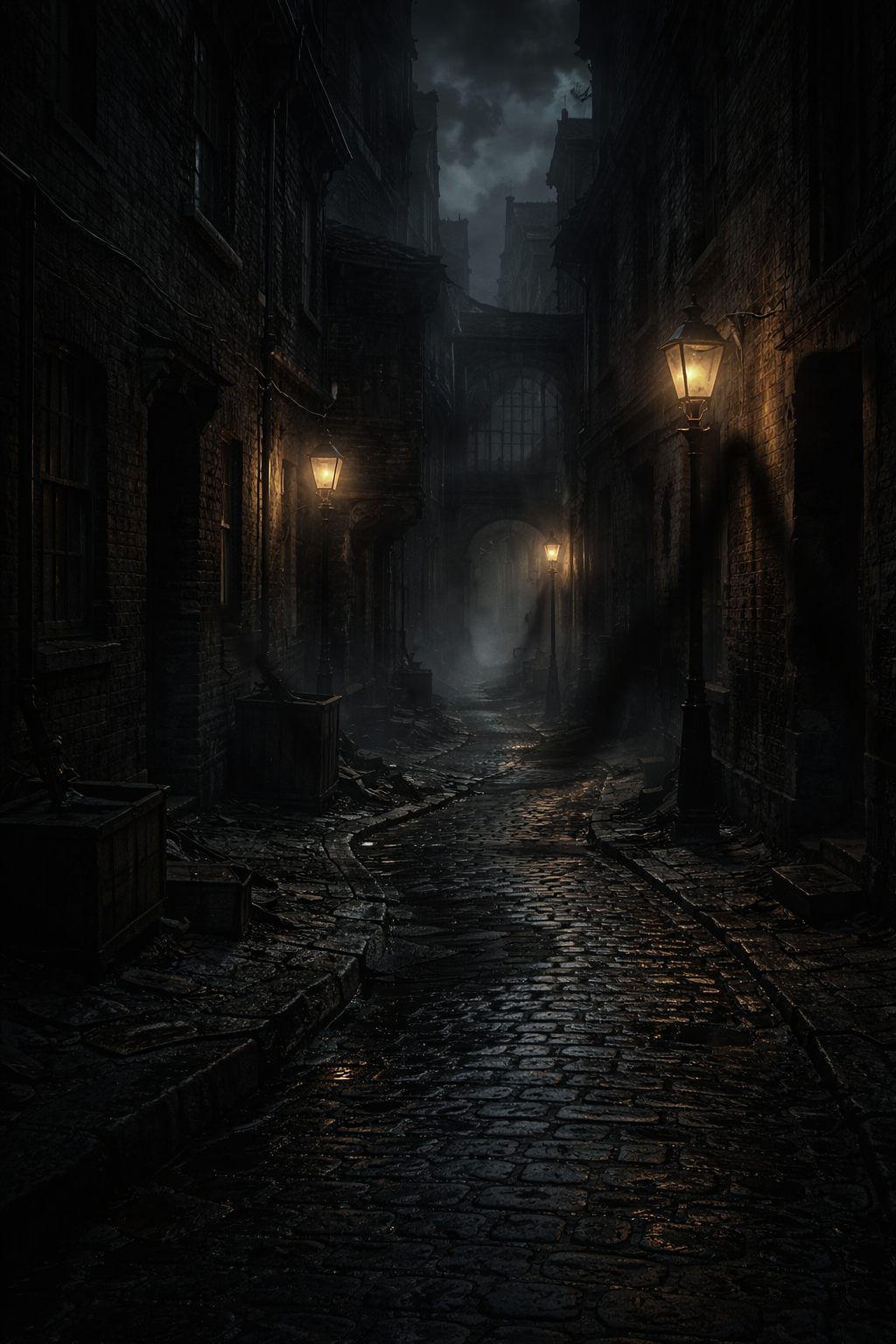
Across these works, the haunted city emerges not merely as a backdrop but as a living landscape of memory, secrecy, and hidden lives. Its streets and buildings accumulate the stories of generations, until the city itself begins to feel like a vast archive of the uncanny.
THE
ENDURANCE
WITHIN THE
LABYRINTH
Across these works, the haunted city reveals itself as more than a setting. It becomes a landscape shaped by memory, architecture, and the countless lives that pass through its streets. From Hugo’s towering cathedral to Dickens’s fog-bound London and Leroux’s hidden chambers beneath the opera house, writers have long understood that cities possess depths invisible to the eye.
The modern city has not lost this quality. If anything, the density and complexity of contemporary urban life have only deepened it. Beneath the rhythm of traffic and electric light, the same hidden layers persist: forgotten histories, secret spaces, and the strange patterns that emerge when millions of lives intersect over time.
In this sense, the haunted city remains one of literature’s most enduring landscapes. Its streets continue to invite stories in which the familiar world quietly opens onto something older, darker, and more mysterious.
One modern exploration of this enduring tradition appears in The Echo of It All, where the layered histories of New Orleans reveal a hidden world beneath the surface of the modern city.
EXPLORE THE HAUNTED CITY
where Gothic literature remains undead within the architecture of haunted cities.
Gothic Horror: Fear of the Unknown
Essential Haunted City Books
What Makes Haunted Cities Uncanny?
Why Americans Tell Ghost Stories Differently